AI For Business Analyst

AI For Business Analyst — independent reviews, comparisons, pricing and step-by-step guides on Aizhi.

  • Object model

    Object model

    In computing, object model has two related but distinct meanings: The properties of objects in general in a specific computer programming language, technology, notation or methodology that uses them. Examples are the object models of Java, the Component Object Model (COM), or Object-Modeling Technique (OMT). Such object models are usually defined using concepts such as class, generic function, message, inheritance, polymorphism, and encapsulation. There is an extensive literature on formalized object models as a subset of the formal semantics of programming languages. A collection of objects or classes through which a program can examine and manipulate some specific parts of its world. In other words, the object-oriented interface to some service or system. Such an interface is said to be the object model of the represented service or system. For example, the Document Object Model (DOM) is a collection of objects that represent a page in a web browser, used by script programs to examine and dynamically change the page. There is a Microsoft Excel object model [1] for controlling Microsoft Excel from another program, and the ASCOM Telescope Driver is an object model for controlling an astronomical telescope. == Features == An object model consists of the following important features: === Object reference === Objects can be accessed via object references. To invoke a method in an object, the object reference and method name are given, together with any arguments. === Interfaces === An interface provides a definition of the signature of a set of methods without specifying their implementation. An object will provide a particular interface if its class contains code that implement the method of that interface. An interface also defines types that can be used to declare the type of variables or parameters and return values of methods. === Actions === An action in object-oriented programming (OOP) is initiated by an object invoking a method in another object. An invocation can include additional information needed to carry out the method. The receiver executes the appropriate method and then returns control to the invoking object, sometimes supplying a result. === Exceptions === Programs can encounter various errors and unexpected conditions of varying seriousness. During the execution of the method many different problems may be discovered. Exceptions provide a clean way to deal with error conditions without complicating the code. A block of code may be defined to throw an exception whenever particular unexpected conditions or errors arise. This means that control passes to another block of code that catches the exception.

    Read more →
  • Digital zombie

    Digital zombie

    A digital zombie is a person so engaged with digital technology or social media they are unable to separate themselves from a persistent online presence. Writing in 2017, University of Sydney researcher Andrew Campbell expressed concerns over whether or not the individual can truly live a full and healthy life while they are preoccupied with the digital world. Other individuals have also begun referencing certain types of behaviour with being a digital zombie. Stefanie Valentic, managing editor of EHS Today, refers to it as people hunting digital creatures through their smartphones in public spaces, always fixed on their phones. The University of Warwick has used the term to argue that further research needs to be done with people who exist in digital form after death to help people grieve their loss. == Modern applications == === Distracted walking === The term digital zombie can refer to a person performing distracted walking, which has been labelled dangerous by the American Academy of Orthopaedic Surgeons. They created the "Digital Deadwalkers" campaign after physicians became aware of the risks associated with walking across intersections and sidewalks while paying attention only to smartphones and not one's surroundings. Also stating that the name is derived from the fact that "they're oblivious to everyone else, so it's like they're dead-walking, sleepwalking." === Living through media === The Department of Sociology, University of Warwick has also identified the term, digital zombie, to refer to an individual who has died but is digitally resurrected, reanimated and socially active. These digital zombies do things in death they did not do when they were alive as they "live" again through a digital self on a digital medium. Dead celebrities sometimes become digital zombies when they are reanimated to appear in commercial advertisements (such as Audrey Hepburn and Bob Monkhouse). Other accidental digital zombies include Tupac Shakur and Michael Jackson who were both digitally resurrected and recreated to perform "live" on stage years after their death. Researchers at the University of Warwick have carried out research into the area of human-computer interaction. in an effort to understand the affect these digital zombies have on grief and bereavement. === Mobile gaming === Writer for EHS Today, Stefanie Valentic, has made observations with the mobile phone video game Pokémon Go, which offers players the experience to hunt and collect digital creatures called Pokémon through their smartphone in real world. Players can be observed simultaneously gazing at their phone while also obliviously walking around their environments looking for Pokémon. Stefanie references these individuals as "digital zombies" since they walk around with no cognition of their surroundings while engaged with their phone. == Health risks == === Heavy use of technology === Research by the University of Sydney has begun looking at how new technology such as digital media and smartphones impact our lives and questioning whether they can create new compulsions and obsessions. The research demonstrates that increased heavy technological use can have negative health consequences similar to drugs, smoking, and alcohol. Marcel O'Gorman, an associate professor of English at the University of Waterloo, has commented on the body of research examining how technology impacts cognition, stating currently that there is no empirical evidence to support any theories that suggest that technology can damage memory and attention span. === Heightened risk to children === Manfred Spitzer, a German psychiatrist, has raised concerns with providing digital devices to children. During the early childhood stage while their brains are rapidly growing, increased exposure to digital devices may deprive them of necessary development required to facilitate brain growth. These concerns are also shared by Korean doctors who believe giving digital devices, like smartphones to children, limits their cognitive development.

    Read more →
  • Fingerprint scanner

    Fingerprint scanner

    Fingerprint scanners are a type of biometric security device that identify an individual by identifying the structure of their fingerprints. They are used in police stations, security industries, smartphones, and other mobile devices. == Fingerprints == People have patterns of friction ridges on their fingers, these patterns are called the fingerprints. Fingerprints are uniquely detailed, durable over an individual's lifetime, and difficult to alter. Due to the unique combinations, fingerprints have become an ideal means of identification. == Types of fingerprint scanners == There are four types of fingerprint scanners: Optical scanners take a visual image of the fingerprint using a digital camera. Capacitive or CMOS scanners use capacitors and thus electric current to form an image of the fingerprint. This type of scanner tends to excel in terms of precision. Ultrasonic fingerprint scanners use high frequency sound waves to penetrate the epidermal (outer) layer of the skin. Thermal scanners sense the temperature differences on the contact surface, in between fingerprint ridges and valleys. All fingerprint scanners are susceptible to spoofing through fingerprints replicated using photographs and 3D printing. == Construction forms == Each type of fingerprint sensor can take two basic forms: the stagnant and the moving fingerprint scanner. Stagnant: The scanning module is mounted statically, and the user is required to swipe their fingers across it. This is cheaper but also less reliable than the moving form. Imaging can be less than ideal if the finger is not dragged over the scanning area at constant speed. Moving: The scanning module is mounted on a movable surface, while the user's finger can remain static. Because this layout allows the scanning module to pass the fingerprint at a constant speed, this method is generally more reliable. == Form factors == === Peripherals === Add-on fingerprint readers for PCs initially appeared in the late 1990's in the form of PCMCIA modules. Microsoft released a model in its IntelliMouse line with an integrated fingerprint reader in 2005. === Integrated readers === Laptops with built-in readers emerged around the same time as peripheral readers with devices such as NECs MC/R730F. IBM produced laptops with integrated readers starting in 2004. Apple introduced fingerprint scanners to their devices under the name Touch ID in 2013. These were initially released on the iPhone 5S, with the technology remaining exclusive to iPhones until the release of the 2016 MacBook Pro. On both laptops and smartphones, the fingerprint sensor usually uses a USB or I2C interface internally.

    Read more →
  • Deconfliction line

    Deconfliction line

    A deconfliction line is an official line of communications established between militaries who are or could be hostile, to avoid dangerous misunderstandings and miscalculations based on ignorance. The ultimate aim is to avoid accidents and conflict escalation. In the 2010s and 2020s, the US and Russia set up deconfliction lines during the Syrian civil war and Russo-Ukrainian War. They were regularly tested by military staff, and used by air traffic controllers and senior military officers. They were used to avoid midair collisions between aircraft in the same or adjacent airspace, and sometimes to give warning of airstrikes. In April 2017, Russia severed the Syrian line in retaliation for a called strike.

    Read more →
  • Case-based reasoning

    Case-based reasoning

    Case-based reasoning (CBR), broadly construed, is the process of solving new problems based on the solutions of similar past problems. In everyday life, an auto mechanic who fixes an engine by recalling another car that exhibited similar symptoms is using case-based reasoning. A lawyer who advocates a particular outcome in a trial based on legal precedents or a judge who creates case law is using case-based reasoning. So, too, an engineer copying working elements of nature (practicing biomimicry) is treating nature as a database of solutions to problems. Case-based reasoning is a prominent type of analogy solution making. It has been argued that case-based reasoning is not only a powerful method for computer reasoning, but also a pervasive behavior in everyday human problem solving; or, more radically, that all reasoning is based on past cases personally experienced. This view is related to prototype theory, which is most deeply explored in cognitive science. == Process == Case-based reasoning has been formalized for purposes of computer reasoning as a four-step process: Retrieve: Given a target problem, retrieve cases relevant to solving it from memory. A case consists of a problem, its solution, and, typically, annotations about how the solution was derived. For example, suppose Fred wants to prepare blueberry pancakes. Being a novice cook, the most relevant experience he can recall is one in which he successfully made plain pancakes. The procedure he followed for making the plain pancakes, together with justifications for decisions made along the way, constitutes Fred's retrieved case. Reuse: Map the solution from the previous case to the target problem. This may involve adapting the solution as needed to fit the new situation. In the pancake example, Fred must adapt his retrieved solution to include the addition of blueberries. Revise: Having mapped the previous solution to the target situation, test the new solution in the real world (or a simulation) and, if necessary, revise. Suppose Fred adapted his pancake solution by adding blueberries to the batter. After mixing, he discovers that the batter has turned blue – an undesired effect. This suggests the following revision: delay the addition of blueberries until after the batter has been ladled into the pan. Retain: After the solution has been successfully adapted to the target problem, store the resulting experience as a new case in memory. Fred, accordingly, records his new-found procedure for making blueberry pancakes, thereby enriching his set of stored experiences, and better preparing him for future pancake-making demands. == Comparison to other methods == At first glance, CBR may seem similar to the rule induction algorithms of machine learning. Like a rule-induction algorithm, CBR starts with a set of cases or training examples; it forms generalizations of these examples, albeit implicit ones, by identifying commonalities between a retrieved case and the target problem. If for instance a procedure for plain pancakes is mapped to blueberry pancakes, a decision is made to use the same basic batter and frying method, thus implicitly generalizing the set of situations under which the batter and frying method can be used. The key difference, however, between the implicit generalization in CBR and the generalization in rule induction lies in when the generalization is made. A rule-induction algorithm draws its generalizations from a set of training examples before the target problem is even known; that is, it performs eager generalization. For instance, if a rule-induction algorithm were given recipes for plain pancakes, Dutch apple pancakes, and banana pancakes as its training examples, it would have to derive, at training time, a set of general rules for making all types of pancakes. It would not be until testing time that it would be given, say, the task of cooking blueberry pancakes. The difficulty for the rule-induction algorithm is in anticipating the different directions in which it should attempt to generalize its training examples. This is in contrast to CBR, which delays (implicit) generalization of its cases until testing time – a strategy of lazy generalization. In the pancake example, CBR has already been given the target problem of cooking blueberry pancakes; thus it can generalize its cases exactly as needed to cover this situation. CBR therefore tends to be a good approach for rich, complex domains in which there are myriad ways to generalize a case. In law, there is often explicit delegation of CBR to courts, recognizing the limits of rule based reasons: limiting delay, limited knowledge of future context, limit of negotiated agreement, etc. While CBR in law and cognitively inspired CBR have long been associated, the former is more clearly an interpolation of rule based reasoning, and judgment, while the latter is more closely tied to recall and process adaptation. The difference is clear in their attitude toward error and appellate review. Another name for case-based reasoning in problem solving is symptomatic strategies. It does require à priori domain knowledge that is gleaned from past experience which established connections between symptoms and causes. This knowledge is referred to as shallow, compiled, evidential, history-based as well as case-based knowledge. This is the strategy most associated with diagnosis by experts. Diagnosis of a problem transpires as a rapid recognition process in which symptoms evoke appropriate situation categories. An expert knows the cause by virtue of having previously encountered similar cases. Case-based reasoning is the most powerful strategy, and that used most commonly. However, the strategy won't work independently with truly novel problems, or where deeper understanding of whatever is taking place is sought. An alternative approach to problem solving is the topographic strategy which falls into the category of deep reasoning. With deep reasoning, in-depth knowledge of a system is used. Topography in this context means a description or an analysis of a structured entity, showing the relations among its elements. Also known as reasoning from first principles, deep reasoning is applied to novel faults when experience-based approaches aren't viable. The topographic strategy is therefore linked to à priori domain knowledge that is developed from a more a fundamental understanding of a system, possibly using first-principles knowledge. Such knowledge is referred to as deep, causal or model-based knowledge. Hoc and Carlier noted that symptomatic approaches may need to be supported by topographic approaches because symptoms can be defined in diverse terms. The converse is also true – shallow reasoning can be used abductively to generate causal hypotheses, and deductively to evaluate those hypotheses, in a topographical search. == Criticism == Critics of CBR argue that it is an approach that accepts anecdotal evidence as its main operating principle. Without statistically relevant data for backing and implicit generalization, there is no guarantee that the generalization is correct. However, all inductive reasoning where data is too scarce for statistical relevance is inherently based on anecdotal evidence. == History == CBR traces its roots to the work of Roger Schank and his students at Yale University in the early 1980s. Schank's model of dynamic memory was the basis for the earliest CBR systems: Janet Kolodner's CYRUS and Michael Lebowitz's IPP. Other schools of CBR and closely allied fields emerged in the 1980s, which directed at topics such as legal reasoning, memory-based reasoning (a way of reasoning from examples on massively parallel machines), and combinations of CBR with other reasoning methods. In the 1990s, interest in CBR grew internationally, as evidenced by the establishment of an International Conference on Case-Based Reasoning in 1995, as well as European, German, British, Italian, and other CBR workshops. CBR technology has resulted in the deployment of a number of successful systems, the earliest being Lockheed's CLAVIER, a system for laying out composite parts to be baked in an industrial convection oven. CBR has been used extensively in applications such as the Compaq SMART system and has found a major application area in the health sciences, as well as in structural safety management. There is recent work that develops CBR within a statistical framework and formalizes case-based inference as a specific type of probabilistic inference. Thus, it becomes possible to produce case-based predictions equipped with a certain level of confidence. One description of the difference between CBR and induction from instances is that statistical inference aims to find what tends to make cases similar while CBR aims to encode what suffices to claim similarly.

    Read more →
  • Comparison of user features of operating systems

    Comparison of user features of operating systems

    Comparison of user features of operating systems refers to a comparison of the general user features of major operating systems in a narrative format. It does not encompass a full exhaustive comparison or description of all technical details of all operating systems. It is a comparison of basic roles and the most prominent features. It also includes the most important features of the operating system's origins, historical development, and role. == Overview == An operating system (OS) is system software that manages computer hardware, software resources, and provides common services for computer programs. Time-sharing operating systems schedule tasks for efficient use of the system and may also include accounting software for cost allocation of processor time, mass storage, printing, and other resources. For hardware functions such as input and output and memory allocation, the operating system acts as an intermediary between programs and the computer hardware, although the application code is usually executed directly by the hardware and frequently makes system calls to an OS function or is interrupted by it. Operating systems are found on many devices that contain a computer – from cellular phones and video game consoles to web servers and supercomputers. As of June 2024, the dominant general-purpose desktop operating system is Microsoft Windows with a market share of around 72.91%. macOS by Apple Inc. is in second place (14.93%), and the varieties of Linux are collectively in third place (4.04%). In the mobile sector, including both smartphones and tablets, Android is dominant with a market share of 71%, followed by Apple's iOS with 28%; for smartphones alone, Android has 72% and iOS has 28%. Linux distributions are dominant in the server and supercomputing sectors. Other specialized classes of operating systems (special-purpose operating systems)), such as embedded and real-time systems, exist for many applications. Security-focused operating systems also exist. Some operating systems have low system requirements (i.e. light-weight Linux distribution). Others may have higher system requirements. Some operating systems require installation or may come pre-installed with purchased computers (OEM-installation), whereas others may run directly from media (i.e. live cd) or flash memory (i.e. USB stick). == MS-DOS == === Overview === MS-DOS (acronym for Microsoft Disk Operating System) is an operating system for x86-based personal computers mostly developed by Microsoft. Collectively, MS-DOS, its rebranding as IBM PC DOS, and some operating systems attempting to be compatible with MS-DOS, are sometimes referred to as "DOS" (which is also the generic acronym for disk operating system). MS-DOS was the main operating system for IBM PC compatible personal computers during the 1980s, from which point it was gradually superseded by operating systems offering a graphical user interface (GUI), in various generations of the graphical Microsoft Windows operating system. IBM licensed and re-released it in 1981 as PC DOS 1.0 for use in its PCs. Although MS-DOS and PC DOS were initially developed in parallel by Microsoft and IBM, the two products diverged after twelve years, in 1993, with recognizable differences in compatibility, syntax, and capabilities. During its lifetime, several competing products were released for the x86 platform, and MS-DOS went through eight versions, until development ceased in 2000. Initially, MS-DOS was targeted at Intel 8086 processors running on computer hardware using floppy disks to store and access not only the operating system, but application software and user data as well. Progressive version releases delivered support for other mass storage media in ever greater sizes and formats, along with added feature support for newer processors and rapidly evolving computer architectures. Ultimately, it was the key product in Microsoft's development from a programming language company to a diverse software development firm, providing the company with essential revenue and marketing resources. It was also the underlying basic operating system on which early versions of Windows ran as a GUI. == Microsoft Windows == === Overview === Microsoft Windows, commonly referred to as Windows, is a group of several proprietary graphical operating system families, all of which are developed and marketed by Microsoft. Each family caters to a certain sector of the computing industry. Active Microsoft Windows families include Windows NT and Windows IoT; these may encompass subfamilies, (e.g. Windows Server or Windows Embedded Compact) (Windows CE). Defunct Microsoft Windows families include Windows 9x, Windows Mobile, and Windows Phone. Microsoft announced an operating environment named Windows on 10 November 1983, as a graphical operating system shell for MS-DOS in response to the growing interest in graphical user interfaces (GUIs); Windows 1.0 first shipped on 20 November 1985. Microsoft Windows came to dominate the world's personal computer (PC) market with over 90% market share, overtaking Mac OS, which had been introduced in 1984, while Microsoft has in 2020 lost its dominance of the consumer operating system market, with Windows down to 30%, lower than Apple's 31% mobile-only share (65% for desktop operating systems only, i.e. "PCs" vs. Apple's 28% desktop share) in its home market, the US, and 32% globally (77% for desktops), where Google's Android leads. Apple came to see Windows as an unfair encroachment on their innovation in GUI development as implemented on products such as the Lisa and Macintosh (eventually settled in court in Microsoft's favor in 1993). As of January 2023, on PCs, Windows is still the most popular operating system in all countries. However, in 2014, Microsoft admitted losing the majority of the overall operating system market to Android, because of the massive growth in sales of Android smartphones. In 2014, the number of Windows devices sold was less than 25% that of Android devices sold. This comparison, however, may not be fully relevant, as the two operating systems traditionally target different platforms. Still, numbers for server use of Windows (that are comparable to competitors) show one third market share, similar to that for end user use. As of October 2020, the most recent version of Windows for PCs, tablets and embedded devices is Windows 10, version 20H2. The most recent version for server computers is Windows Server, version 20H2. A specialized version of Windows also runs on the Xbox One video game console. === Windows 95 === Windows 95 introduced a redesigned shell based around a desktop metaphor; File shortcuts (also known as shell links) were introduced and the desktop was re-purposed to hold shortcuts to applications, files and folders, reminiscent of Mac OS. In Windows 3.1 the desktop was used to display icons of running applications. In Windows 95, the currently running applications were displayed as buttons on a taskbar across the bottom of the screen. The taskbar also contained a notification area used to display icons for background applications, a volume control and the current time. The Start menu, invoked by clicking the "Start" button on the taskbar or by pressing the Windows key, was introduced as an additional means of launching applications or opening documents. While maintaining the program groups used by its predecessor Program Manager, it also displayed applications within cascading sub-menus. The previous File Manager program was replaced by Windows Explorer and the Explorer-based Control Panel and several other special folders were added such as My Computer, Dial Up Networking, Recycle Bin, Network Neighborhood, My Documents, Recent documents, Fonts, Printers, and My Briefcase among others. AutoRun was introduced for CD drives. The user interface looked dramatically different from prior versions of Windows, but its design language did not have a special name like Metro, Aqua or Material Design. Internally it was called "the new shell" and later simply "the shell". The subproject within Microsoft to develop the new shell was internally known as "Stimpy". In 1994, Microsoft designers Mark Malamud and Erik Gavriluk approached Brian Eno to compose music for the Windows 95 project. The result was the six-second start-up music-sound of the Windows 95 operating system, The Microsoft Sound and it was first released as a startup sound in May 1995 on Windows 95 May Test Release build 468. When released for Windows 95 and Windows NT 4.0, Internet Explorer 4 came with an optional Windows Desktop Update, which modified the shell to provide several additional updates to Windows Explorer, including a Quick Launch toolbar, and new features integrated with Internet Explorer, such as Active Desktop (which allowed Internet content to be displayed directly on the desktop). Some of the user interface elements introduced in Windows 95, such as the desktop, taskbar, Start menu and Windows

    Read more →
  • ISO/IEC 11801

    ISO/IEC 11801

    International standard ISO/IEC 11801 Information technology — Generic cabling for customer premises specifies general-purpose telecommunication cabling systems (structured cabling) that are suitable for a wide range of applications (analog and ISDN telephony, various data communication standards, building control systems, factory automation). It is published by ISO/IEC JTC 1/SC 25/WG 3 of the International Organization for Standardization (ISO) and the International Electrotechnical Commission (IEC). It covers both balanced copper cabling and optical fibre cabling. The standard was designed for use within commercial premises that may consist of either a single building or of multiple buildings on a campus. It was optimized for premises that span up to 3 km, up to 1 km2 office space, with between 50 and 50,000 persons, but can also be applied for installations outside this range. A major revision was released in November 2017, unifying requirements for commercial, home and industrial networks. == Classes and categories == The standard defines several link/channel classes and cabling categories of twisted-pair copper interconnects, which differ in the maximum frequency for which a certain channel performance is required: Class A: Up to 100 kHz using Category 1 cable and connectors Class B: Up to 1 MHz using Category 2 cable and connectors Class C: Up to 16 MHz using Category 3 cable and connectors Class D: Up to 100 MHz using Category 5e cable and connectors Class E: Up to 250 MHz using Category 6 cable and connectors Class EA: Up to 500 MHz using category 6A cable and connectors (Amendments 1 and 2 to ISO/IEC 11801, 2nd Ed.) Class F: Up to 600 MHz using Category 7 cable and connectors Class FA: Up to 1 GHz (1000 MHz) using Category 7A cable and connectors (Amendments 1 and 2 to ISO/IEC 11801, 2nd Ed.) Class BCT-B: Up to 1 GHz (1000 MHz) using with coaxial cabling for BCT applications. (ISO/IEC 11801-1, Edition 1.0 2017-11) Class I: Up to 2 GHz (2000 MHz) using Category 8.1 cable and connectors (ISO/IEC 11801-1, Edition 1.0 2017-11) Class II: Up to 2 GHz (2000 MHz) using Category 8.2 cable and connectors (ISO/IEC 11801-1, Edition 1.0 2017-11) The standard link impedance is 100 Ω. (The older 1995 version of the standard also permitted 120 Ω and 150 Ω in Classes A−C, but this was removed from the 2002 edition.) The standard defines several classes of optical fiber interconnect: OM1: Multimode, 62.5 μm core; minimum modal bandwidth of 200 MHz·km at 850 nm OM2: Multimode, 50 μm core; minimum modal bandwidth of 500 MHz·km at 850 nm OM3: Multimode, 50 μm core; minimum modal bandwidth of 2000 MHz·km at 850 nm OM4: Multimode, 50 μm core; minimum modal bandwidth of 4700 MHz·km at 850 nm OM5: Multimode, 50 μm core; minimum modal bandwidth of 4700 MHz·km at 850 nm and 2470 MHz·km at 953 nm OS1: Single-mode, maximum attenuation 1 dB/km at 1310 and 1550 nm OS1a: Single-mode, maximum attenuation 1 dB/km at 1310, 1383, and 1550 nm OS2: Single-mode, maximum attenuation 0.4 dB/km at 1310, 1383, and 1550 nm Grandfathered === OM5 === OM5 fiber is designed for wideband applications using SWDM multiplexing of 4–16 carriers (40G=4λ×10G, 100G=4λ×25G, 400G=4×4λ×25G) in the 850–953 nm range. === Category 7 === Class F channel and Category 7 cable are backward compatible with Class D/Category 5e and Class E/Category 6. Class F features even stricter specifications for crosstalk and system noise than Class E. To achieve this, shielding was added for individual wire pairs and the cable as a whole. Unshielded cables rely on the quality of the twists to protect from EMI. This involves a tight twist and carefully controlled design. Cables with individual shielding per pair such as Category 7 rely mostly on the shield and therefore have pairs with longer twists. The Category 7 cable standard was ratified in 2002, and primarily introduced to support 10 gigabit Ethernet over 100 m of copper cabling. Like the earlier standards, it contains four twisted copper wire pairs rated for transmission frequencies of up to 600 MHz. However, in 2006, Category 6A was ratified for Ethernet to allow 10 Gbit/s while still using the conventional 8P8C connector. Care is required to avoid signal degradation by mixing cable and connectors not designed for that use, however similar. Most manufacturers of active equipment and network cards have chosen to support the 8P8C for their 10 gigabit Ethernet products on copper and not GG45, ARJ45, or TERA connectors as Class F would have originally called for. Therefore, the Category 6 specification was revised to Category 6A to permit this use; products therefore require a Class EA channel (ie, Cat 6A). As of 2019, some equipment has been introduced which has connectors supporting the Class F (Category 7) channel. Note, however, that Category 7 is not recognized by the TIA/EIA. === Category 7A === Class FA (Class F Augmented) channels and Category 7A cables, introduced by ISO 11801 Edition 2 Amendment 2 (2010), are defined at frequencies up to 1000 MHz. The intent of the Class FA was to possibly support the future 40 gigabit Ethernet: 40GBASE-T. Simulation results have shown that 40 gigabit Ethernet may be possible at 50 meters and 100 gigabit Ethernet at 15 meters. In 2007, researchers at Pennsylvania State University predicted that either 32 nm or 22 nm circuits would allow for 100 gigabit Ethernet at 100 meters. However, in 2016, the IEEE 802.3bq working group ratified the amendment 3 which defines 25GBASE-T and 40GBASE-T on Category 8 cabling specified to 2000 MHz. The Class FA therefore does not support 40G Ethernet. As of 2025, there is no equipment that has connectors supporting the Class FA (Category 7A) channel. Category 7A is not recognized in TIA/EIA. === Category 8 === Category 8 was ratified by the TR43 working group under ANSI/TIA 568-C.2-1. It is defined up to 2000 MHz and only for distances up to 30 m or 36 m, depending on the patch cords used. ISO/IEC JTC 1/SC 25/WG 3 developed the equivalent standard ISO/IEC 11801-1:2017/COR 1:2018, with two options: Class I channel (Category 8.1 cable): minimum cable design U/FTP or F/UTP, fully backward compatible and interoperable with Class EA (Category 6A) using 8P8C connectors; Class II channel (Category 8.2 cable): F/FTP or S/FTP minimum, interoperable with Class FA (Category 7A) using TERA or GG45. == Abbreviations for twisted pairs == Annex E, Acronyms for balanced cables, provides a system to specify the exact construction for both unshielded and shielded balanced twisted pair cables. It uses three letters—U for unshielded, S for braided shielding, and F for foil shielding—to form a two-part abbreviation in the form of xx/xTP, where the first part specifies the type of overall cable shielding, and the second part specifies shielding for individual cable elements. Common cable types include U/UTP (unshielded cable); U/FTP (individual pair shielding without the overall screen); F/UTP, S/UTP, or SF/UTP (overall screen without individual shielding); and F/FTP, S/FTP, or SF/FTP (overall screen with individual foil shielding). == 2017 edition == In November 2017, a new edition was released by ISO/IEC JTC 1/SC 25 "Interconnection of information technology equipment" subcommittee. It is a major revision of the standard which has unified several prior standards for commercial, home, and industrial networks, as well as data centers, and defines requirements for generic cabling and distributed building networks. The new series of standards replaces the former 11801 standard and includes six parts: == Versions == ISO/IEC 11801:1995 (Ed. 1) ISO/IEC 11801:2000 (Ed. 1.1) – Edition 1, Amendment 1 ISO/IEC 11801:2002 (Ed. 2) ISO/IEC 11801:2008 (Ed. 2.1) – Edition 2, Amendment 1 ISO/IEC 11801:2010 (Ed. 2.2) – Edition 2, Amendment 2 ISO/IEC 11801-1:2017, -1:2017/Cor 1:2018, -2:2017, -3:2017, -3:2017/Amd 1:2021, -3:2017/Cor 1:2018, -4:2017, -4:2017/Cor 1:2018, -5:2017, -5:2017/Cor 1:2018, -6:2017, -6:2017/Cor 1:2018 (As of September 2023, this set is current.)

    Read more →
  • Haul video

    Haul video

    A haul video is a video recording posted to the Internet in which a person discusses items that they recently purchased, sometimes going into detail about their experiences during the purchase and the cost of the items they bought. The posting of haul videos (or hauls) was a growing trend between 2008 and 2016. Often the items bought are books, clothing, groceries, household goods, makeup, or jewellery. == Details == The posting of haul videos grew as a trend between 2008 and 2016. By late 2010, nearly a quarter of a million haul videos had been shared on the website YouTube alone. Certain videos have each received tens of millions of views. Many young adults (mostly women) have displayed their shopping hauls, while including their beauty and design commentary in the narration. The videos are often grouped by store name or by the type of product (cosmetics, accessories, shoes, postage stamps, etc.). Before haul videos became an online trend, millions of people spent time watching other people, in technical product videos unbox their latest new gadgets and technology. The trend of "unboxing videos" had emerged during 2006. Haul videos have led to celebrity status for some people. Other haul video bloggers have entered sponsorship deals and advertising programs from major brands. The videos are rarely negative about the products being reviewed. This aspect of the genre of haul videos makes sponsorship by brand advertisers particularly appealing. Brands including J.C. Penney contacted haulers as part of their marketing efforts for Back to School 2010. Haul videos also convinced three San Francisco Bay Area area natives to launch HaulBlog–a parody site that creates fake haul videos which poke fun at the phenomenon. The site is also home to the original monthly web series "The Haul Monitor" a humorous commentary show that features haul videos from around the community. == Fashion media == Sarah Sykes and John Zimmerman of Carnegie Mellon University, HCII and School of Design wrote an article "Making Sense of Haul Videos: Self-created Celebrities Fill a Fashion Media Gap". They discuss their analysis and research project examining what makes video bloggers so popular on YouTube, as well as how it affects fashion media through the production of haul videos. == Federal Trade Commission == The United States Federal Trade Commission recently enacted laws to regulate many types of online publishers and content creators. The posted information includes blogging and podcasting in text, images, audio, and video. While any publishers (including the haul-video creators) are allowed to accept free merchandise and advertising, the gifts or payments must be fully (and clearly) disclosed to reveal being paid by a brand name, as a sponsor, to review a product. The Canadian Radio-television and Telecommunications Commission is also closely monitoring such Internet activities.

    Read more →
  • Viewport

    Viewport

    A viewport is a polygon viewing region in computer graphics. In computer graphics theory, there are two region-like notions of relevance when rendering some objects to an image. In textbook terminology, the world coordinate window is the area of interest (meaning what the user wants to visualize) in some application-specific coordinates, e.g. miles, centimeters etc. The word window as used here should not be confused with the GUI window, i.e. the notion used in window managers. Rather it is an analogy with how a window limits what one can see outside a room. In contrast, the viewport is an area (typically rectangular) expressed in rendering-device-specific coordinates, e.g. pixels for screen coordinates, in which the objects of interest are going to be rendered. Clipping to the world-coordinates window is usually applied to the objects before they are passed through the window-to-viewport transformation. For a 2D object, the latter transformation is simply a combination of translation and scaling, the latter not necessarily uniform. An analogy of this transformation process based on traditional photography notions is to equate the world-clipping window with the camera settings and the variously sized prints that can be obtained from the resulting film image as possible viewports. Because the physical-device-based coordinates may not be portable from one device to another, a software abstraction layer known as normalized device coordinates is typically introduced for expressing viewports; it appears for example in the Graphical Kernel System (GKS) and later systems inspired from it. In 3D computer graphics, the viewport refers to the 2D rectangle used to project the 3D scene to the position of a virtual camera. A viewport is a region of the screen used to display a portion of the total image to be shown. In virtual desktops, the viewport is the visible portion of a 2D area which is larger than the visualization device. When viewing a document in a web browser, the viewport is the region of the browser window which contains the visible portion of the document. If the size of the viewport changes, for example as a result of the user resizing the browser window, then the browser may reflow the document (recalculate the locations and sizes of elements of the document). If the document is larger than the viewport, the user can control the portion of the document which is visible by scrolling in the viewport.

    Read more →
  • Attention inequality

    Attention inequality

    Attention inequality is the inequality of distribution of attention across users on social networks, people in general, and for scientific papers. Yun Family Foundation introduced "Attention Inequality Coefficient" as a measure of inequality in attention and arguments it by the close interconnection with wealth inequality. == Relationship to economic inequality == Attention inequality is related to economic inequality since attention is an economically scarce good. The same measures and concepts as in classical economy can be applied for attention economy. The relationship develops also beyond the conceptual level—considering the AIDA process, attention is the prerequisite for real monetary income on the Internet. On data of 2018, a significant relationship between likes and comments on Facebook to donations is proven for non-profit organizations. == Attention economy == The attention economy refers to the practice of maximizing the attention users give to a product for advertising-related reasons. Attention economy remains one of the most common forms of advertising, and has been steadily increasing thanks to new technologies such as television, internet and social media. It is one of the most widely-used approaches to economy for its effectiveness for maximising the noticeability of a certain product. == Attention inequality in social media == In social media, attention inequality refers to the unequal distribution of users' attention on social media platforms. This means that instead of an equal distribution of attention, fewer sources receive a disproportionate share of attention, leaving many unnoticed. This phenomenon is possibly the result of social media algorithms, which are commonly designed to drive maximum engagement. This phenomenon is a large factor in the polarization and creation of echo-chambers. Social media algorithms tend to note content that is already performing well and display it to more users, while content that is equally engaging or well-made is not recommended to users. Posts that trigger strong emotions usually out-perform more "uncontroversial" content. When many users interact with the post, it signals the algorithm that the specific post drives engagement. The algorithm then tends to recommend that type of content to an exponential number of people, potentially outperforming "un-emotional" content. These factors, when combined, tend to create an unequal social media environment. == Attention inequality in science == According to a recent 2025 study about research inequality among scientists published in Information Processing and Management, scientific discourse is restricted to a small group of connected scientists, and is frequently not an accurate representation of the whole scientific community. Using citation-network analysis in the fields of nanoscience and chemical physics, the study claims that a group of connected scientists has a significant notability in the scientific community. The calculated connection strength between these scientists is estimated to be about 4.5, the study also says that these authors cite each other four times more often than would be predicted in a random network, whereas ordinary scientists that exist outside of this group only reach an estimated connection strength of 0.9. The study findings suggest that that scientific attention is not distributed by merit, but rather by the connectedness of the scientists involved in the research. == Extent == As data of 2008 shows, 50% of the attention is concentrated on approximately 0.2% of all hostnames, and 80% on 5% of hostnames. The Gini coefficient of attention distribution lay in 2008 at over 0.921 for such commercial domains names as ac.jp and at 0.985 for .org-domains. The Gini coefficient was measured on Twitter in 2016 for the number of followers as 0.9412, for the number of mentions as 0.9133, and for the number of retweets as 0.9034. For comparison, the world's income Gini coefficient was 0.68 in 2005 and 0.904 in 2018. More than 96% of all followers, 93% of the retweets, and 93% of all mentions are owned by 20% of Twitter. == Causes == At least for scientific papers, today's consensus states that inequality is unexplainable by variations of quality and individual talent. The Matthew effect plays a significant role in the emergence of attention inequality—those who already enjoy large amounts of attention get even more attention, and those who do not lose even more. Ranking algorithms based on relevance to the user have been found to alleviate the inequality of the number of posts across topics.

    Read more →
  • Video game

    Video game

    A video game, computer game, or simply game is an electronic game that involves interaction with a user interface or input device (such as a joystick, controller, keyboard, or motion sensing device) to generate visual feedback from a display device, most commonly shown in a video format on a television set, computer monitor, flat-panel display or touchscreen on handheld devices, or a virtual reality headset. Most modern video games are audiovisual, with audio complement delivered through speakers or headphones, and sometimes also with other types of sensory feedback (e.g., haptic technology that provides tactile sensations). Some video games also allow microphone and webcam inputs for in-game chatting and livestreaming. Video games are typically categorized according to their hardware platform, which traditionally includes arcade video games, console games, and computer games (which includes LAN games, online games, and browser games). More recently, the video game industry has expanded onto mobile gaming through mobile devices (such as smartphones and tablet computers), virtual and augmented reality systems, and remote cloud gaming. Video games are also classified into a wide range of genres based on their style of gameplay and target audience. The first video game prototypes in the 1950s and 1960s were simple extensions of electronic games using video-like output from large, room-sized mainframe computers. The first consumer video game was the arcade video game Computer Space in 1971, which took inspiration from the earlier 1962 computer game Spacewar!. In 1972 came the now-iconic video game Pong and the first home console, the Magnavox Odyssey. The industry grew quickly during the "golden age" of arcade video games from the late 1970s to early 1980s but suffered from the crash of the North American video game market in 1983 due to loss of publishing control and saturation of the market. Following the crash, the industry matured, was dominated by Japanese companies such as Nintendo, Sega, and Sony, and established practices and methods around the development and distribution of video games to prevent a similar crash in the future, many of which continue to be followed. In the 2000s, the core industry centered on "AAA" games, leaving little room for riskier experimental games. Coupled with the availability of the Internet and digital distribution, this gave room for independent video game development (or "indie games") to gain prominence into the 2010s. Since then, the commercial importance of the video game industry has been increasing. The emerging Asian markets and proliferation of smartphone games in particular are altering player demographics towards casual and cozy gaming, and increasing monetization by incorporating games as a service. Today, video game development requires numerous skills, vision, teamwork, and liaisons between different parties, including developers, publishers, distributors, retailers, hardware manufacturers, and other marketers, to successfully bring a game to its consumers. As of 2020, the global video game market had estimated annual revenues of US$159 billion across hardware, software, and services, which is three times the size of the global music industry and four times that of the film industry in 2019, making it a formidable heavyweight across the modern entertainment industry. The video game market is also a major influence behind the electronics industry, where personal computer component, console, and peripheral sales, as well as consumer demands for better game performance, have been powerful driving factors for hardware design and innovation. == Origins == Early video games used interactive electronic devices with various display formats. The earliest example dates to 1947—a "cathode-ray tube amusement device" was filed for a patent on 25 January 1947, by Thomas T. Goldsmith Jr. and Estle Ray Mann, and issued on 14 December 1948, as U.S. Patent 2455992. Inspired by radar display technology, it consisted of an analog device allowing a user to control the parabolic arc of a dot on the screen to simulate a missile being fired at targets, which were paper drawings fixed to the screen. Other early examples include the Nimrod computer at the 1951 Festival of Britain; Christopher Strachey's Checkers, possibly the first game to display visuals on an electronic screen in 1952; OXO, a tic-tac-toe computer game by Alexander S. Douglas for the EDSAC in 1952; Tennis for Two, an electronic interactive game engineered by William Higinbotham in 1958; and Spacewar!, written by Massachusetts Institute of Technology students Martin Graetz, Steve Russell, and Wayne Wiitanen's on a DEC PDP-1 computer in 1962. Each game had different means of display: NIMROD had a panel of lights to play the game of Nim, OXO had a graphical display to play tic-tac-toe, Tennis for Two had an oscilloscope to display a side view of a tennis court, and Spacewar! had the DEC PDP-1's vector display to have two spaceships battle each other. These inventions laid the foundation for modern video games. In 1966, while working at Sanders Associates, Ralph H. Baer devised a system to play a basic table tennis game on a television screen. With the company's approval, Baer created the prototype known as the "Brown Box". Sanders patented Baer's innovations and licensed them to Magnavox, which commercialized the technology as the first home video game console, the Magnavox Odyssey, released in 1972. Separately, Nolan Bushnell and Ted Dabney, inspired by seeing Spacewar! running at Stanford University, devised a similar version running in a smaller coin-operated arcade cabinet using a less expensive computer. This was released as Computer Space, the first arcade video game, in 1971. Bushnell and Dabney went on to form Atari, Inc., and with Allan Alcorn, created their second arcade game in 1972, the hit ping pong-style Pong, which was directly inspired by the table tennis game on the Odyssey. Atari made a home version of Pong, which was released by Christmas 1975. The success of the Odyssey and Pong, both as an arcade game and home machine, launched the video game industry. Both Baer and Bushnell have been titled "Father of Video Games" for their contributions. == Terminology == The term "video game" was developed to describe electronic games played on a video display rather than on a teletype printer, audio speaker, or similar device. This also distinguished from handheld electronic games such as Merlin, which commonly used LED lights for indicators not in combination for imaging purposes. "Computer game" may also be used as a descriptor, as all these types of games essentially require the use of a computer processor; in some cases, it is used interchangeably with "video game". Particularly in the United Kingdom and Western Europe, this is common due to the historic relevance of domestically produced microcomputers. Other terms used include digital game, for example, by the Australian Bureau of Statistics. The term "computer game" can also refer to PC games, which are played primarily on personal computers or other flexible hardware systems, to distinguish them from console games, arcade games, or mobile games. Other terms, such as "television game", "telegame", or "TV game", had been used in the 1970s and early 1980s, particularly for home gaming consoles that rely on connection to a television set. However, these terms were also used interchangeably with "video game" in the 1970s, primarily due to "video" and "television" being synonymous. In Japan, where consoles like the Odyssey were first imported and then made within the country by the large television manufacturers such as Toshiba and Sharp Corporation, such games are known as "TV games", "TV geemu", or "terebi geemu". The term "TV game" is still commonly used into the 21st century. "Electronic game" may also be used to refer to video games, but this also incorporates devices like early handheld electronic games that lack any video output. The first appearance of the term "video game" emerged around 1973. The Oxford English Dictionary cited a 10 November 1973 BusinessWeek article as the first printed use of the term. Though Bushnell believed the term came from a vending magazine review of Computer Space in 1971, a review of the major vending magazines Vending Times and Cashbox showed that the term may have come even earlier, appearing first in a letter dated July 10, 1972. In the letter, Bushnell uses the term "video game" twice. Per video game historian Keith Smith, the sudden appearance suggested that the term had been proposed and readily adopted by those in the field. Around March 1973, Ed Adlum, who ran Cashbox's coin-operated section until 1972 and then later founded RePlay Magazine, covering the coin-op amusement field, in 1975, used the term in an article in March 1973. In a September 1982 issue of RePlay, Adlum is credited with first naming these games as "video games": "RePlay

    Read more →
  • Bare machine

    Bare machine

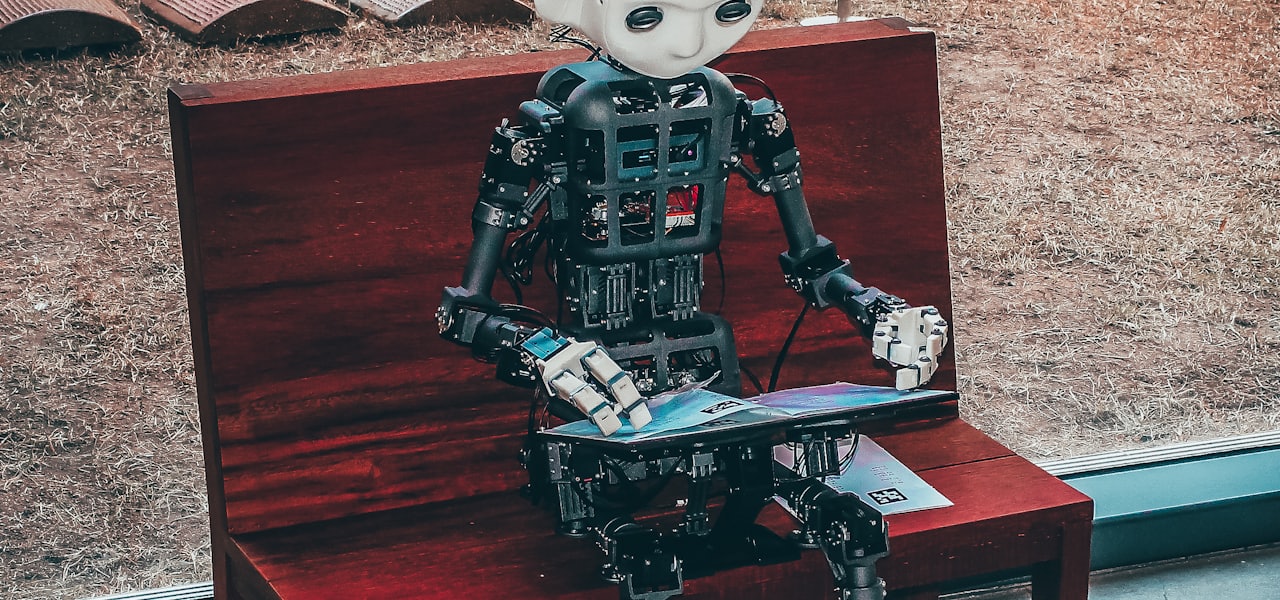
    In information technology, a bare machine (or bare-metal computer) is a computer which has no operating system. The software executed by a bare machine, commonly called a bare metal program or bare metal application, is designed to interact directly with hardware. Bare machines are widely used in embedded systems, particularly in cases where resources are limited or high performance is required. == Bare machine computing == Bare Machine Computing is a computing paradigm in which application software runs directly on a bare machine as a single, stand-alone executable, without an operating system or device drivers. The application software has direct access to hardware resources, and there is typically no distinction between user and kernel mode. It is self-managed software that boots, loads and runs without using any other software components. Bare metal programs are typically written in a close-to-hardware language such as C or assembly language. == Advantages == Typically, a bare-metal application will run faster, use less memory and be more power efficient than an equivalent program that relies on an operating system, due to the inherent overhead imposed by system calls. For example, hardware inputs and outputs are directly accessible to bare metal software, whereas they must usually be accessed through system calls when using an OS. It has no OS and therefore has no OS-related vulnerabilities. == Disadvantages == Bare metal applications typically require more effort to develop because operating system services such as memory management and task scheduling are not available. Debugging a bare-metal program may be complicated by factors such as: Lack of a standard output. The target machine may differ from the hardware used for program development (e.g., emulator, simulator). This forces setting up a way to load the bare-metal program onto the target (flashing), start the program execution and access the target resources. == Examples == === Early computers === Early computers, such as the PDP-11, allowed programmers to load a program, supplied in machine code, to RAM. The resulting operation of the program could be monitored by lights, and output derived from magnetic tape, print devices, or storage. Amdahl UTS's performance improves by 25% when run on bare metal without VM, the company said in 1986. === Embedded systems === Bare machine programming is a common practice in embedded systems, in which microcontrollers or microprocessors boot directly into monolithic, single-purpose software without loading an operating system. Such embedded software can vary in structure. For example, one such program paradigm, known as foreground-background or superloop architecture, consists of an infinite main loop in which each task is executed sequentially and must voluntarily return control back to the loop. The loop runs these cooperative background processes that are not time-critical, while interrupt service routines momentarily interrupt the loop to handle time-critical foreground tasks.

    Read more →
  • JBoss Tools

    JBoss Tools

    JBoss Tools is a set of Eclipse plugins and features designed to help JBoss and JavaEE developers develop applications. It is an umbrella project for the JBoss developed plugins that will make it into JBoss Developer Studio. == Modules == JBoss Tools includes the following modules: Visual Page Editor (VPE). The visual editor contributed by Exadel supports visual editing of HTML and JSF (JSP and Facelets) pages. VPE also includes visual support for JSF component libraries including JBoss RichFaces. Seam Tools. Includes support for (for example) seam-gen, RichFaces VE integration, Seam related code completion and refactoring. Hibernate Tools. Supporting mapping files, annotations and JPA with reverse engineering, code completion, project wizards, refactoring, interactive HQL/JPA-QL/Criteria execution and more. In short a merger of Hibernate Tools and Exadel ORM features. JBoss AS Tools. Easy start, stop and debug of JBoss AS 4+ servers from within Eclipse. Also includes features for packaging and deployment of any type of Eclipse project. Drools IDE. Rules file editing, Rete View, working memory debugging/inspection and more. jBPM Tools. jBPM workflow editing, deployment, etc. JBossWS Tools. Inspecting, invoking, developing and functional/load/compliance testing of web services over HTTP, base tooling provided by soapUI with the addition of JBossWS specific features/support. JBoss ESB Tools. The structured xml editor for the jboss-esb.xml file used in JBoss ESB. Birt Tools. Hibernate and Seam extensions for Eclipse BIRT. Portal Tools. JBoss Tools supports the JSR-168 Portlet Specification (Portlet 1.0), JSR-286 Portlet Specification (Portlet 2.0) and works with PortletBridge for supporting Portlets in JSF/Seam applications. To enable these features, add the JBoss Portlet facet to a new or an existing web project. Core/General Tools. To reduce the UI clutter, most of the "configure project" menu items move into the Configure menu introduced in Eclipse 3.5 instead of always having a static JBoss Tools menu entry show up even in projects unrelated to JBoss Tools. Smooks Tools. The editor for Smooks configuration files. JBoss ESB Tools. The ESB project Wizard, which creates a project that can be deployed as an .esb archive to a JBoss AS-based server with JBoss ESB installed. JMX Tools. JMX Tools allows establishing multiple JMX connections and provides views for exploring the JMX tree and execute operations directly from Eclipse. The JMX Tools replaces the JMX node previously available in the JBoss Server View. JST/JSF Tools. RichFaces Support, Code Assists, Web XML/JSP/XHTML Editors, CSS Style Editing, web.xml validation, Faceleted taglib in taglib.xml is supported with XSD schema location. Project Examples. The experimental feature called Project Example wizard aims to allow users to download example projects from a remote site and have them working out-of-the-box. AS/Project Archives Tools. To deploy projects compressed, configurable in the server editor. If enabled, all projects deployed to that server will be compressed instead of in an exploded folder. Maven Tools. The optional integration with m2eclipse to provide Maven support for projects created by JBoss Tools and to some extent core WTP projects. BPEL Tools. A BPEL Editor based on the Eclipse BPEL project has been added to JBoss Tools. This means that users can create, edit and deploy BPEL artifacts for the Riftsaw BPEL Runtime. CDI (JSR-299) Tools. Support of the Contexts and Dependency Injection annotations; it works on any Eclipse Java project (via the Configure menu with CDI enabled).

    Read more →
  • Boba liberal

    Boba liberal

    Boba liberal is a term mostly used within the Asian diaspora communities in the West, especially in the United States. It describes someone of East or Southeast Asian descent living in the West who has a shallow, surface-level liberal outlook. It is also occasionally used to describe conservatives who weaponize their East or Southeast Asian identity. The neologism emerged among the Asian American leftist community on Twitter who accused "boba liberals" of only holding their liberal beliefs to appear more white-adjacent by engaging in progressive social movements or viewpoints, while at the same time disregarding and trivializing issues concerning Asians. Mary Chao, writing for The North Jersey Record, said that "Asians call peers boba liberals when they aspire to liberal whiteness." An article in The Yale Herald described it as a term "used to describe the ethnocentric politics of Asian Americans, usually of East Asian descent, who exclusively advocate for issues that benefit themselves, without acknowledging problematic dimensions of their own history and working to support other people of color." The feminist magazine Fem said that "the faces of boba liberalism are Asian Americans that are part of the middle and upper economic class. As a result, boba liberals disregard the negative effects of capitalism because they profit from it. For instance, boba liberals tend to focus on advocating for Asian representation in white spaces, or discussing whether or not wearing chopsticks in one's hair is culture appropriation. These topics are popular within boba liberal circles, all while dialogue regarding inequality, globalization, and racial injustice are purposely neglected." UnHerd notes that conservative Asian Americans have used the term not to critique capitalism, but to "aim at a small but influential group of progressive Asian-American activists who are supposedly selling out other Asians, especially working-class Asians, in order to win brownie points from elite, generally white liberals." MRAsians have similarly used the term to attack Asian American feminists who supported the Black Lives Matter movement. The Asian identity of boba liberals has often been accused of being shallow and superficial. Boba liberals are accused of using surface-level stereotypical Asian traits such as liking boba tea to bolster their Asian credentials. Plan A Magazine, an Asian diaspora magazine, described the film Crazy Rich Asians and the sitcom Fresh Off the Boat as "boba liberal media", calling them the result of "a specific kind of atomized identity politics". Other media outlets have connected the Crazy Rich Asians film to boba liberalism. == Controversy == The term "boba liberal" was coined in 2019 by Vietnamese American Twitter user Redmond (@diaspora_is_red) to analyze a form of Asian American liberalism through a Marxist lens. Redmond has criticized the misappropriation of their neologism by stripping away the Marxist framework by failing to discuss "socialism, communism, the capitalist system, imperialism, and the diaspora bourgeoisie" and conflating "boba liberalism" with the flawed concept of "East Asian privilege". In 2024, Redmond criticized misuse of the term by conservatives and liberals, and said "The term boba liberalism can go away for all I care. It's corny and stale". === United States === One commentator described boba liberals as supporting policies that primarily benefit upper-income Asian-Americans, and not necessarily the Asian-American community as a whole. Therefore, while the word "liberal" is used in the term, it is not mutually exclusive to one specific ideology, as it may also extend to conservative-aligned Asians in some areas, as they would often take advantage of the "model minority" label by defending such measures.

    Read more →
  • Bootstrap (front-end framework)

    Bootstrap (front-end framework)

    Bootstrap (formerly Twitter Bootstrap) is a free and open-source CSS framework directed at responsive, mobile-first front-end web development. It contains HTML, CSS and (optionally) JavaScript-based design templates for typography, forms, buttons, navigation, and other interface components. As of May 2023, Bootstrap is the 17th most starred project (4th most starred library) on GitHub, with over 164,000 stars. According to W3Techs, Bootstrap is used by 19.2% of all websites. == Features == Bootstrap is an HTML, CSS and JS library that focuses on simplifying the development of informative web pages (as opposed to web applications). The primary purpose of adding it to a web project is to apply Bootstrap's choices of color, size, font and layout to that project. As such, the primary factor is whether the developers in charge find those choices to their liking. Once added to a project, Bootstrap provides basic style definitions for all HTML elements. The result is a uniform appearance for prose, tables and form elements across web browsers. In addition, developers can take advantage of CSS classes defined in Bootstrap to further customize the appearance of their contents. For example, Bootstrap has provisioned for light- and dark-colored tables, page headings, more prominent pull quotes, and text with a highlight. Bootstrap also comes with several JavaScript components which do not require other libraries like jQuery. They provide additional user interface elements such as dialog boxes, tooltips, progress bars, navigation drop-downs, and carousels. Each Bootstrap component consists of an HTML structure, CSS declarations, and in some cases accompanying JavaScript code. They also extend the functionality of some existing interface elements, including for example an auto-complete function for input fields. The most prominent components of Bootstrap are its layout components, as they affect an entire web page. The basic layout component is called "Container", as every other element in the page is placed in it. Developers can choose between a fixed-width container and a fluid-width container. While the latter always fills the width with the web page, the former uses one of the five predefined fixed widths, depending on the size of the screen showing the page: Smaller than 576 pixels 576–768 pixels 768–992 pixels 992–1200 pixels 1200–1400 pixels Larger than 1400 pixels Once a container is in place, other Bootstrap layout components implement a CSS Flexbox layout through defining rows and columns. A precompiled version of Bootstrap is available in the form of one CSS file and three JavaScript files that can be readily added to any project. The raw form of Bootstrap, however, enables developers to implement further customization and size optimizations. This raw form is modular, meaning that the developer can remove unneeded components, apply a theme and modify the uncompiled Sass files. == History == === Early beginnings === Bootstrap, originally named Twitter Blueprint, was developed by Mark Otto and Jacob Thornton at Twitter in 2010 as a framework to encourage consistency across internal tools. Before Bootstrap, various libraries were used for interface development, which led to inconsistencies and a high maintenance burden. According to Otto: A super small group of developers and I got together to design and build a new internal tool and saw an opportunity to do something more. Through that process, we saw ourselves build something much more substantial than another internal tool. Months later, we ended up with an early version of Bootstrap as a way to document and share common design patterns and assets within the company. After a few months of development by a small group, many developers at Twitter began to contribute to the project as a part of Hack Week, a hackathon-style week for the Twitter development team. It was renamed from Twitter Blueprint to Twitter Bootstrap and released as an open-source project on August 19, 2011. It has continued to be maintained by Otto, Thornton, a small group of core developers, and a large community of contributors. === Bootstrap 2 === On January 31, 2012, Bootstrap 2 was released, which added built-in support for Glyphicons, several new components, as well as changes to many of the existing components. This version supports responsive web design, meaning the layout of web pages adjusts dynamically, taking into account the characteristics of the device used (whether desktop, tablet, mobile phone). Shortly before the release of Bootstrap 2.1.2, Otto and Thornton left Twitter, but committed to continue to work on Bootstrap as an independent project. === Bootstrap 3 === On August 19, 2013, Bootstrap 3 was released. It redesigned components to use flat design and a mobile first approach. Bootstrap 3 features new plugin system with namespaced events. Bootstrap 3 dropped Internet Explorer 7 and Firefox 3.6 support, but there is an optional polyfill for these browsers. Bootstrap 3 was also the first version released under the twbs organization on GitHub instead of the Twitter one. === Bootstrap 4 === Otto announced Bootstrap 4 on October 29, 2014. The first alpha version of Bootstrap 4 was released on August 19, 2015. The first beta version was released on August 10, 2017. Otto suspended work on Bootstrap 3 on September 6, 2016, to free up time to work on Bootstrap 4. Bootstrap 4 was finalized on January 18, 2018. Significant changes include: Major rewrite of the code Replacing Less with Sass Addition of Reboot, a collection of element-specific CSS changes in a single file, based on Normalize Dropping support for IE8, IE9, and iOS 6 CSS Flexible Box support Adding navigation customization options Adding responsive spacing and sizing utilities Switching from the pixels unit in CSS to root ems Increasing global font size from 14px to 16px for enhanced readability Dropping the panel, thumbnail, pager, and well components Dropping the Glyphicons icon font Huge number of utility classes Improved form styling, buttons, drop-down menus, media objects and image classes Bootstrap 4 supports the latest versions of Google Chrome, Firefox, Internet Explorer, Opera, and Safari (except on Windows). It additionally supports back to IE10 and the latest Firefox Extended Support Release (ESR). === Bootstrap 5 === Bootstrap 5 was officially released on May 5, 2021. Major changes include: New offcanvas menu component Removing dependence on jQuery in favor of vanilla JavaScript Rewriting the grid to support responsive gutters and columns placed outside of rows Migrating the documentation from Jekyll to Hugo Dropping support for Internet Explorer Moving testing infrastructure from QUnit to Jasmine Adding custom set of SVG icons Adding CSS custom properties Improved API Enhanced grid system Improved customizing docs Updated forms RTL support Built in darkmode support

    Read more →